
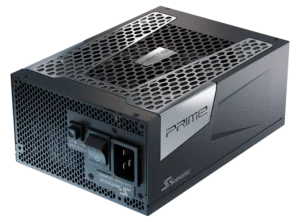
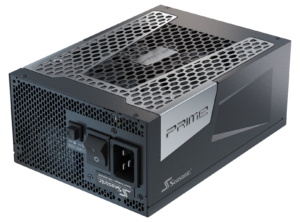
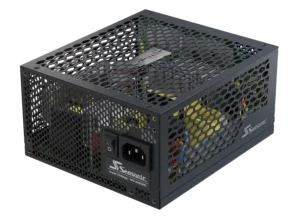
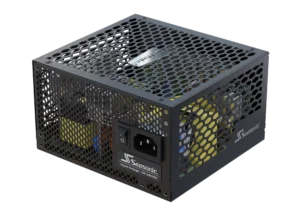
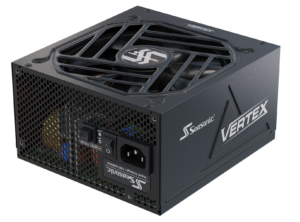
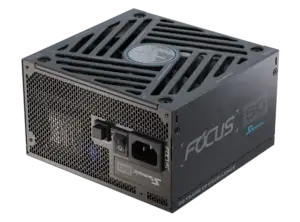
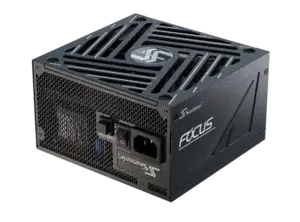
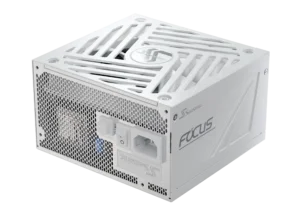
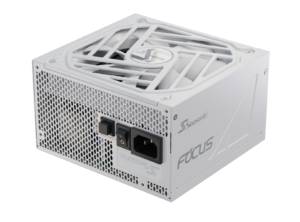
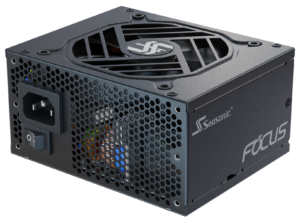
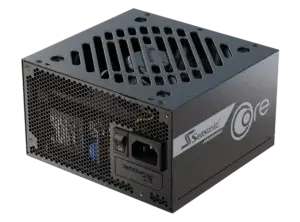
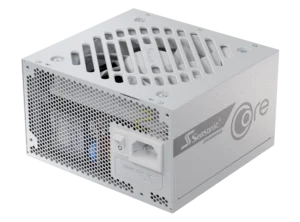
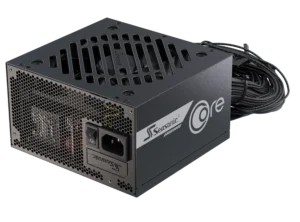
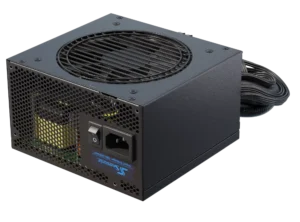
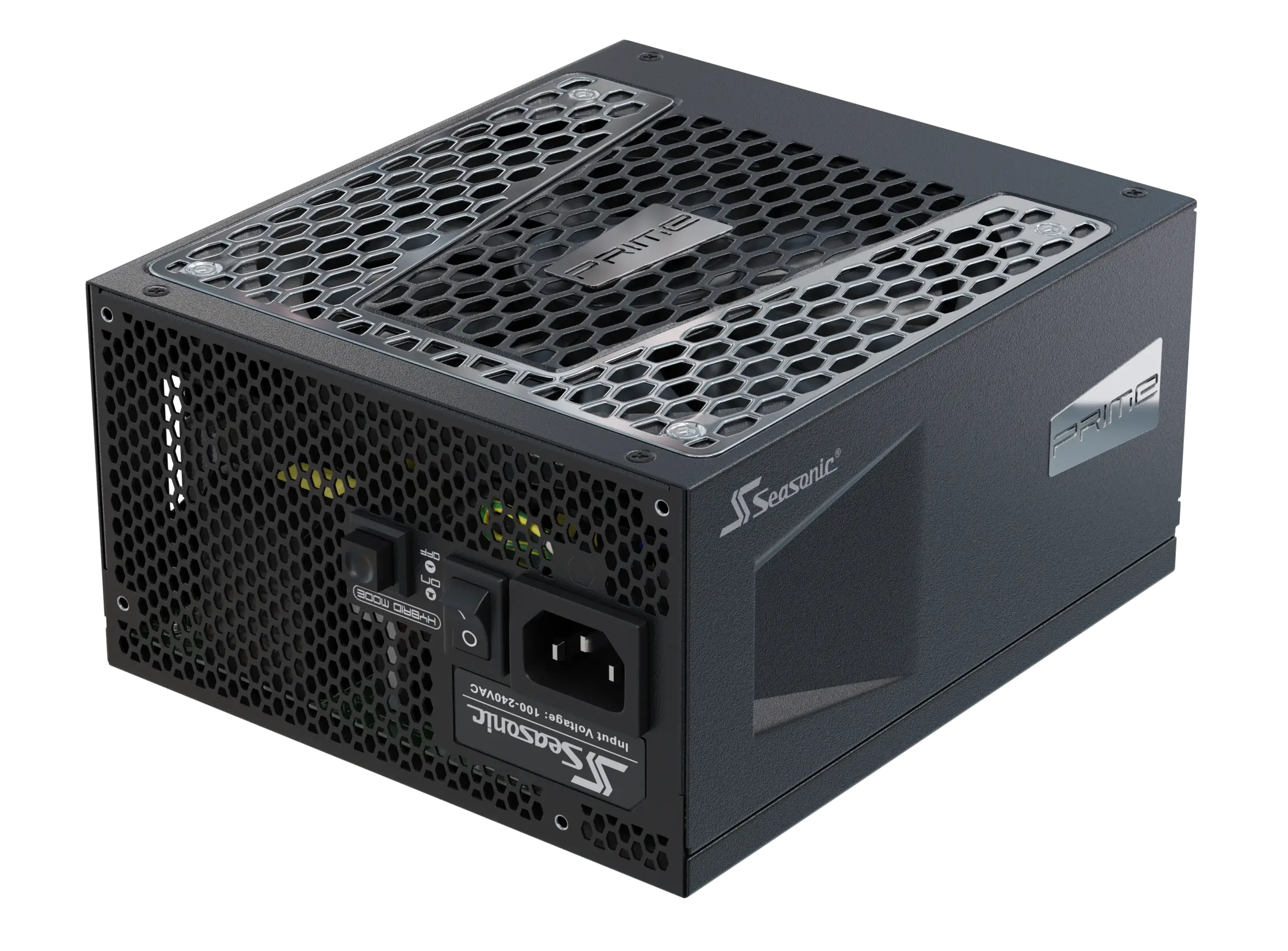

The RTX 5090 really pushes performance to a new level, and with that, it changes what the whole system needs, especially power delivery. Thus, picking a PSU today is about whether the system can stay stable under real, often pretty heavy workloads. In this article, we get across Seasonic PRIME PSU models that withstand evolving power requirements in the tech world.
Power requirements for next-gen RTX 5090 systems
The new GeForce RTX 5090 GPU line demonstrates to rig builders worldwide that they go beyond the updated wattage capabilities and show how they handle insane loads. Like when the system would normally crash, but they just keep pushing thanks to all that hardware under the hood. Exploring technical specifications is a part of the job; the real experience starts when you run your system with the RTX 5090 GPU.
The manufacturer’s recommendations for a suitable PSU power capability start from 1000W, but it’s more of a baseline you can rely on. In a real use case, the RTX 5090 GPU behaves much more aggressively: it doesn’t just consume energy, but constantly jumps over loads.
For example, in typical scenarios when you play present-day games or run rendering, the GPU can show short spikes up to 650W–700W (according to technical forums where users noted the GPU performance). It’s not under a heavy load scenario, just the normal state for light tasks that don’t need heavy power use or anything graphics-heavy on screen. Moreover, ultra-short power spikes can reach ~800W–900W. They last only milliseconds, but they’re what actually make or break system stability. And you should consider these cases when choosing a PSU to handle graphics lifting with RTX 5090 easily.
Choosing the RTX 5090 GPU for your system needs, you should pay attention to what you will really run on it and what PSU wattage actually gives you in real-world terms.
- 1000W is the bare minimum, which is mentioned in technical specifications as a lower limit.
- 1200W already seems like a sufficient configuration for a high-performance setup.
- 1300W–1600W is the range where the system starts to run comfortably with plenty of headroom.
ATX 3.1 and PCIe 5.1: Key standards for RTX 5090 compatibility
The ATX 3.1 standard is actually an industry response to the demands modern GPUs bring today. Namely, sharp, brief, and very high spikes in energy consumption. It’s important to understand that this behavior is driven by modern GPU boosting algorithms and dynamic workload changes, which can cause rapid fluctuations in power demand. During heavy-graphics gaming, some moments only last a few seconds, but suddenly demand a lot more power and rendering. That’s why GPUs spike power like that – to keep performance stable, so in reality, you don’t even notice what’s happening inside your PC.
The RTX 5090 GPU is a good case in point of such spikes under heavy load. It may require a power of around 600W, while at the same time creating short spikes that are much higher than the average power draw. That’s where the ATX 3.1 standard brings clarity – it gives the power supply capability to handle short-term power spikes that go well above the GPU’s rated power. In a real setup, it shows when the PSU instantly compensates for these fluctuations without a drop in voltage.
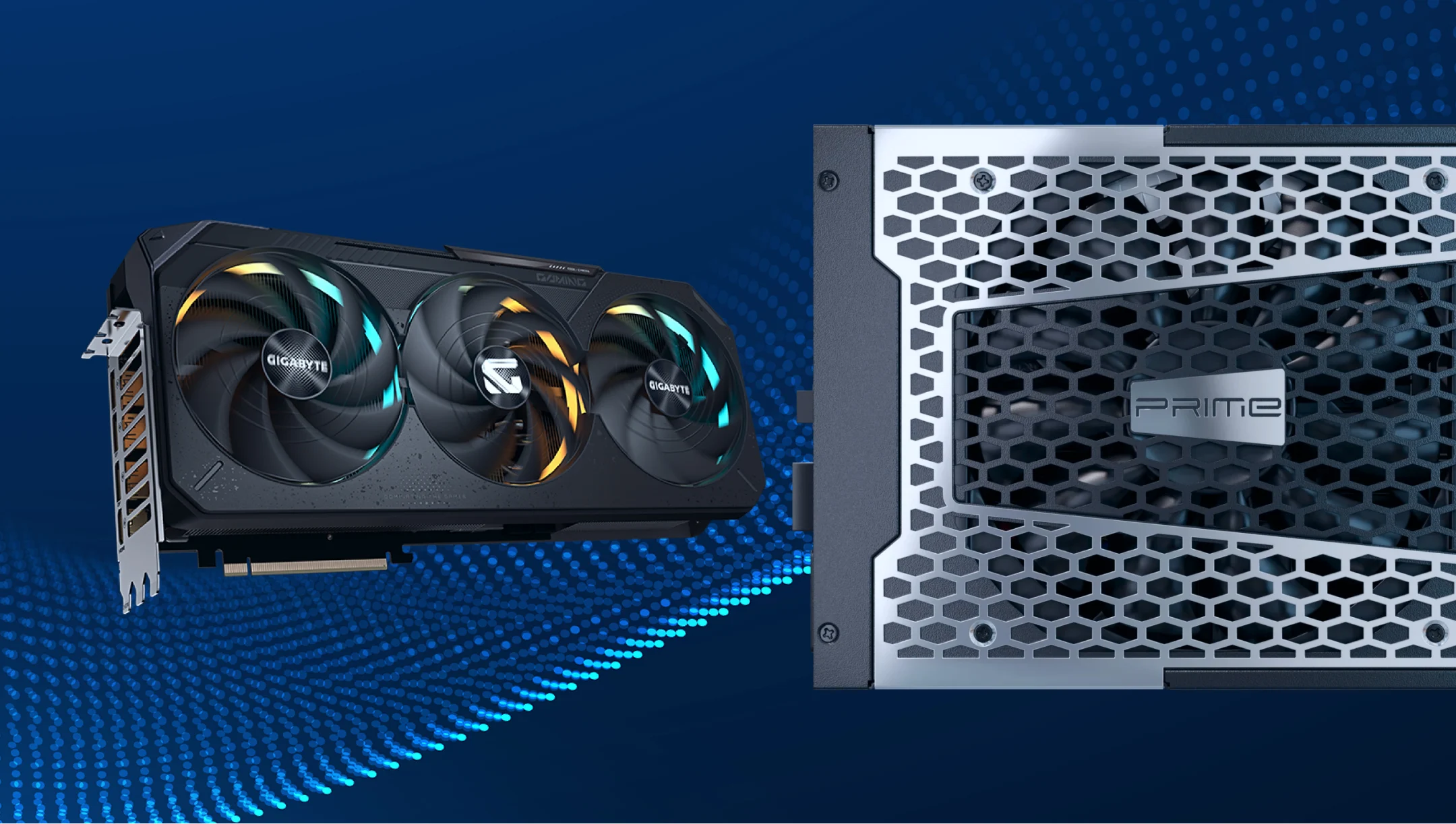
The PCIe 5.1 standard is more about the interface and the GPU powering logic. This standard is responsible for refining and stabilizing performance with the new 12V-2×6 connector. Keep marketing claims separate from actual reality: PCIe 5.1 standard doesn’t provide more power; it makes power delivery more controlled and safer, especially under heavy loads.
The RTX 5090 GPU is a synonym of peak performance in 2026, while ATX 3.1 and PCIe 5.1 standards ensure that this level of performance is always there when you need it.
Seasonic PRIME ATX 3.1 power supply line review
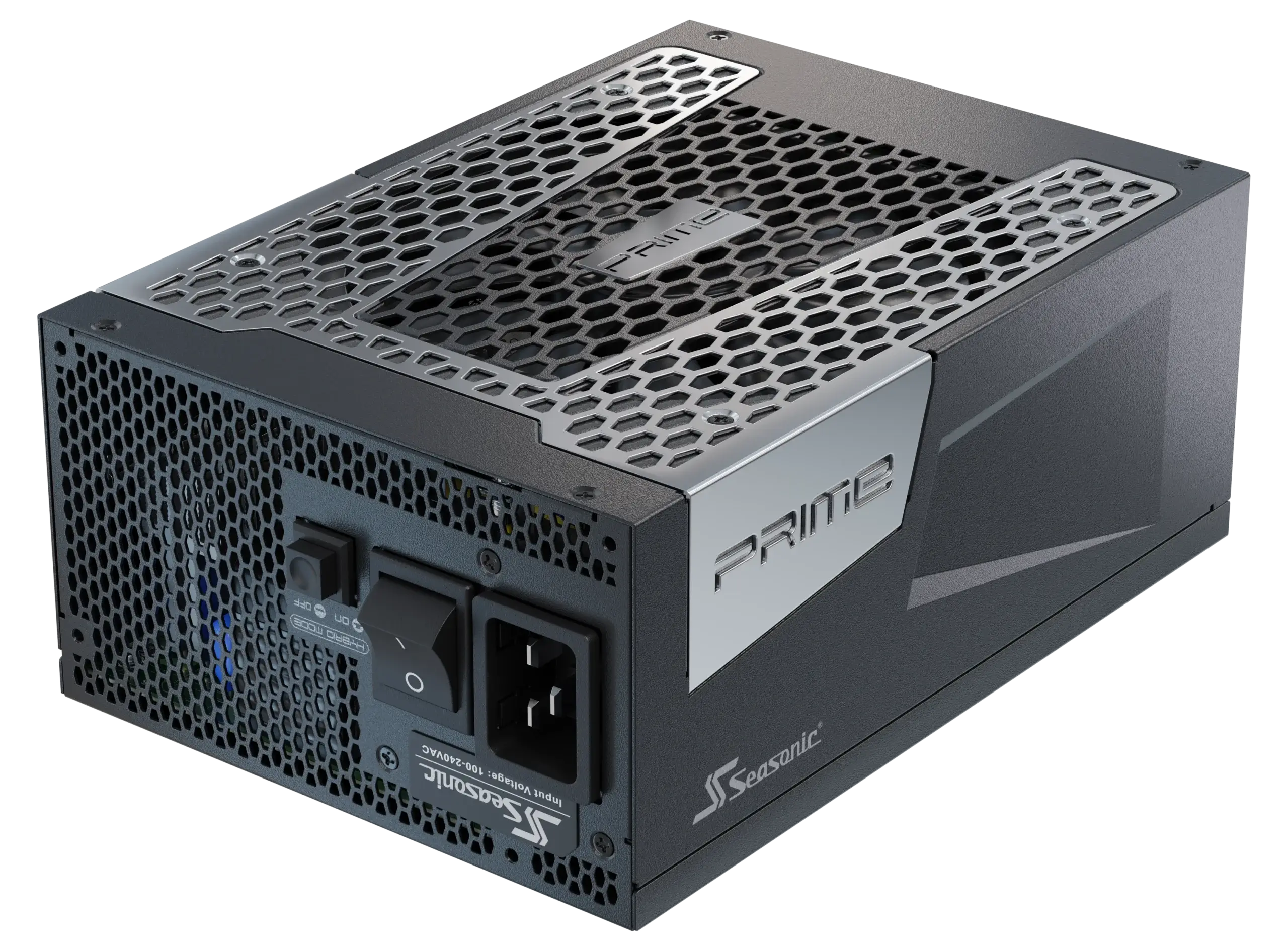
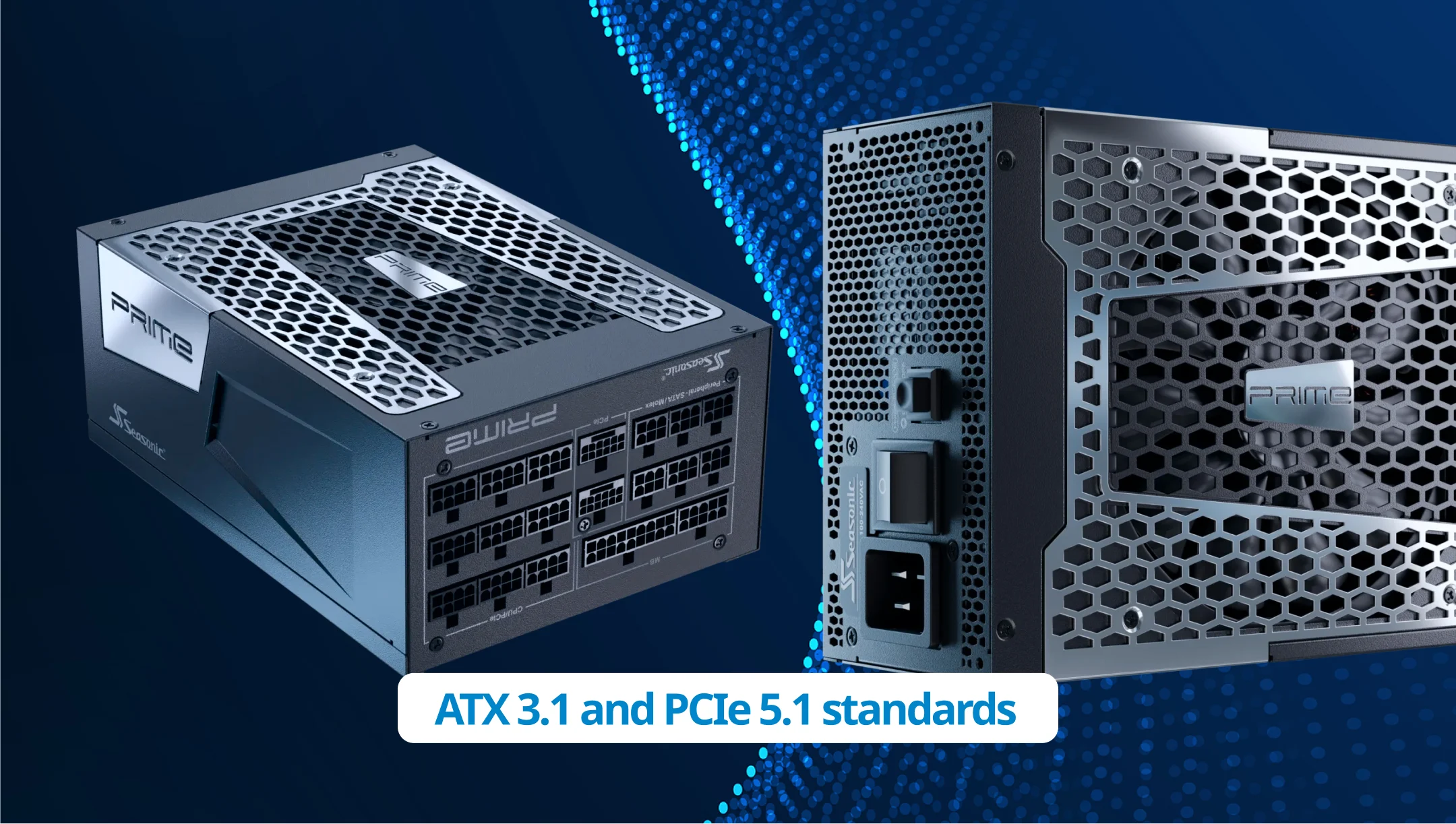
The Seasonic PRIME ATX 3.1 power supplies are the benchmark hardware for systems that run on RTX 5090 GPUs and more powerful models. The whole PRIME PSU product line was designed specifically to meet the high demands of modern PC components, including next-gen GPUs like the RTX 5090 series. They easily withstand short-term power spikes that significantly exceed the system’s rated power consumption, which is a fundamental requirement for stability for now.
The PRIME TX and PX series are now frequently used not only for gaming setups, but also for AI and workstation tasks. For example, the Seasonic PRIME PX-2200 PSU is marketed as a PSU that can handle even multi-GPU setups with very high overall power demands.
The Seasonic TX PSU series assists rigs that want maximum efficiency, minimal noise, and stability as the top priority for PC users. This is often the go-to option for an RTX 5090 build with a high-end CPU, especially if you want things to stay quiet and cool even when you push it hard.
The Seasonic PX PSU series is more about versatility and headroom. For example, the Seasonic PX-2200 PSU is the tier for AI workloads, render farms, and multi-GPU configurations where there may be more than one RTX 5090. Overall, the TX PSU series operates more quietly and runs cooler. The PX PSUs offer more headroom and versatility, especially if the system is expanded.
In real-world use, both PX and TX PSUs deliver stable performance in gaming scenarios, with no impact on frame rate or smoothness. And also in situations like these:
- running heavy scenes (AI / Blender / Unreal);
- a sharp spike when loading a scene;
- long sessions at 90–100% GPU load.
Seasonic PRIME ATX 3.1 PSUs real-world tests and reviews show very low voltage fluctuations (within ~0.5–1%) and keep voltage regulation extremely stable, even when the load suddenly jumps. That is what distinguishes Seasonic PRIME PSUs that don’t just work on paper, but hold up in real life.
The RTX 5090 may be stable under average load, but a single sharp spike will cause a weaker PSU to reboot or display a black screen. Seasonic PRIME PSUs absorb these moments without any dramatic consequences.
In the table below, we collected the main points about Seasonic PRIME ATX 3.1 PSUs.
| Seasonic PRIME ATX 3.1 PSU models | Leistungskapazität | Certification level | GPU connectors | Key features |
|---|---|---|---|---|
| PRIME TX -1300 ATX 3.1 | 1300W | 80 PLUS® Titanium | 12V-2x6 (PCIe 5.1) | Provide maximum performance and quiet operation for high-end gaming tasks and workstations. |
| PRIME TX -1600 ATX 3.1 | 1600W | 80 PLUS® Titanium | 12V-2x6 (PCIe 5.1) | Flagship setup for the RTX 5090 + top-tier CPU with no compromises. |
| PRIME PX -1600 ATX 3.1 | 1600W | 80 PLUS® Platinum | 12V-2x6 (PCIe 5.1) | Focus on high-end GPU/AI systems with extremely high peak workloads, balancing stability and cost. |
| PRIME PX -2200 ATX 3.1 | 2200W | 80 PLUS® Platinum | 12V-2x6 (PCIe 5.1) | Designed for extreme builds, AI training, and multi-GPU systems. |
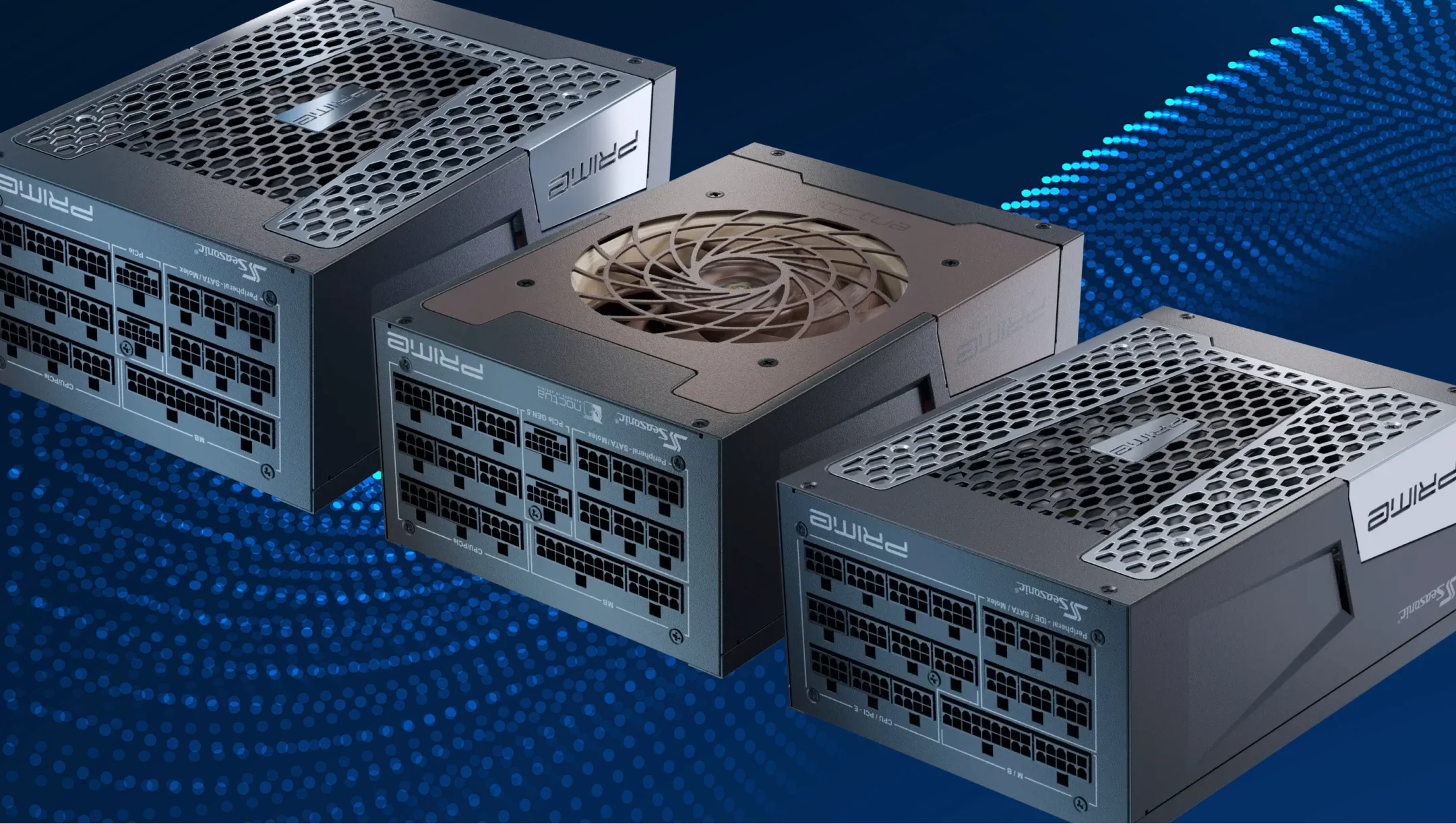
Seasonic PRIME TX-1300 ATX 3.1: Performance for high-end builds
The Seasonic PRIME TX-1300 ATX 3.1 PSU is assumed by many PC builders not as another one rig component, but a core part that handles both AI workloads and gaming. Talking about rigs with the use of RTX 5090 GPU, it’s more like a stability backbone that defines how predictably the whole system behaves under load.
In real high-end setups, the Seasonic PRIME TX-1300 ATX 3.1 PSU operates in its comfort zone, without pushing its capabilities to the limit. What’s more, it has a great advantage, compared to PSU models from previous series, – it handles GPU spikes and keeps the 12V rail steady without any noticeable drops. In real use, during launching a demanding scene or a sudden transition to a GPU-heavy workload, it prevents usual issues like random reboots or black screens.
But not only does its reaction to sudden spikes mean a lot. What really distinguishes them is their behaviour when they run under heavy load for a long time. The Seasonic PRIME TX-1300 ATX 3.1 PSU doesn’t ramp up the fan aggressively even after an hour or two of operation at 80–90% load. And that’s especially important for RTX 5090 builds, where the GPU itself is a major source of heat and noise. It also meets power requirements for the RTX 5090 and provides the headroom you need, so the system isn’t always running at its limit. This directly affects stability during peak loads, component longevity, and even acoustic comfort.
All in all, Seasonic PRIME TX-1300 ATX 3.1 addresses the main issue with modern systems: it’s not only average consumption that matters, but it still behaves in a stable and reliable way during peak loads.
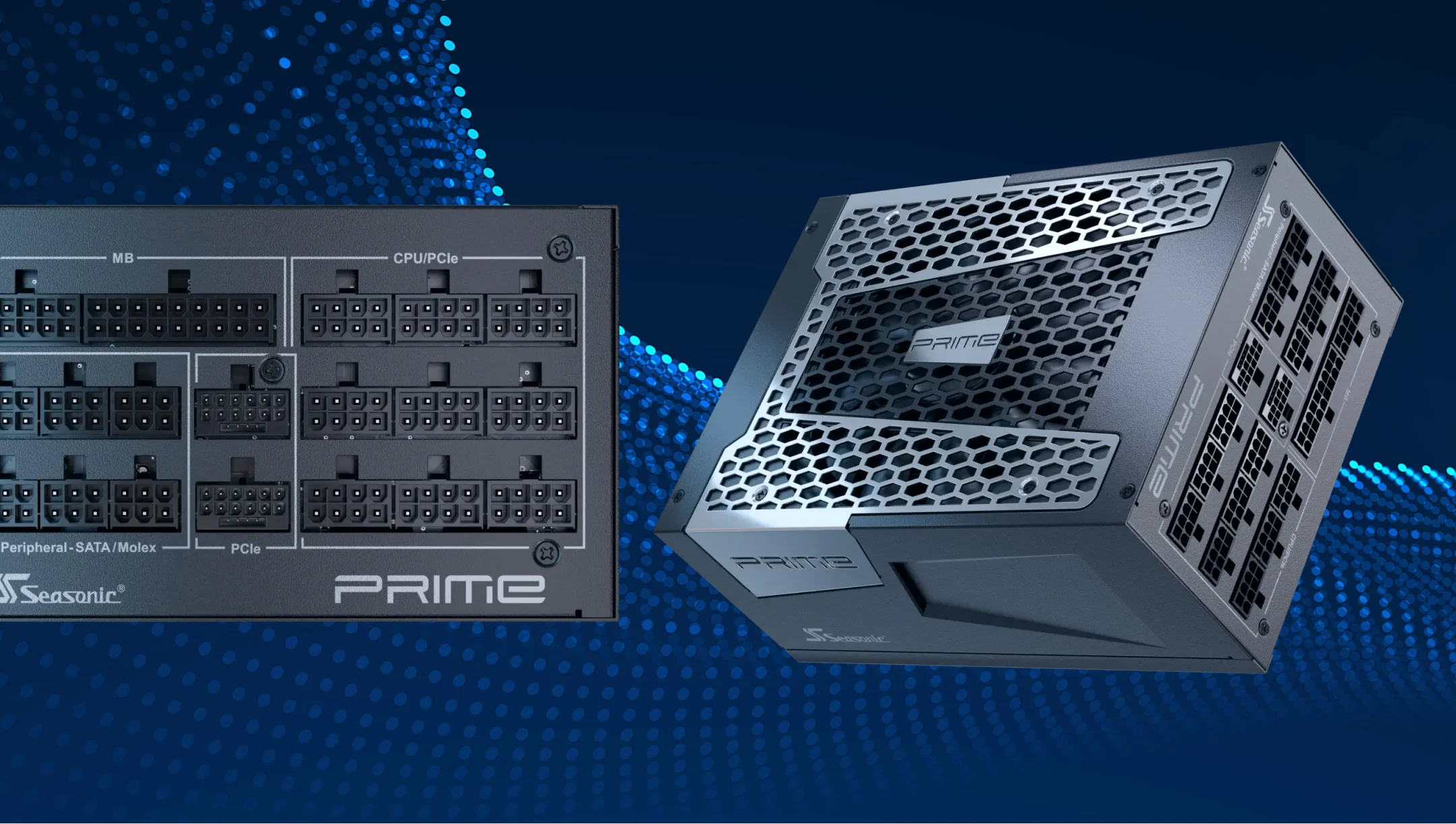
Why the Seasonic PRIME TX-1600 ATX 3.1 and TX-1600 Noctua Edition PSUs stand out
In the context of powering systems with RTX 5090 GPUs, the Seasonic PRIME TX-1600 ATX 3.1 and TX-1600 Noctua Edition PSUs were also designed to keep up with their sharp power spikes and highly dynamic load behavior. That’s why they both stand in one category as two powerhorses that give precise and clean power while still behaving consistently under heavy load.
They both are built on a single flagship Seasonic PRIME platform design, where electrical performance is key:
- extremely low ripple values;
- a stable 12V rail even under heavy loads;
- 80 PLUS® Titanium-level efficiency (≈94%+).
Thus, they easily deliver clean power that doesn’t put additional strain on the GPU and CPU, even during long rendering sessions or AI workloads.
The Noctua Edition PSU features Noctua’s proprietary NF-A12x25 fan and a custom cooling system, but the real value shows up less in tests and more in how quiet it stays under load. According to tests, the fan in hybrid mode can remain completely off up to approximately 50% load (≈800W), and even beyond that, it accelerates very smoothly, without sudden changes in noise.
In fact, the Seasonic PRIME TX-1600 ATX 3.1 PSU and the Noctua Edition PSU are similar in the key features they provide that are important for systems with RTX 5090 GPU series. The real difference is that in the Noctua Edition PSU, Noctua took noise reduction to the next level by using their own fan and specially designed fan grille. Here’s what they both do:
- handle the RTX 5090’s peak loads;
- don’t run “on the edge” in high-end systems, and remain stable even under sustained 80–90% loads;
- don’t compromise the user experience; they’re quiet and consistent, with no unexpected reboots or noise jumps.
Long story short – the Seasonic PRIME TX-1600 ATX 3.1 PSU is all about maximum performance and stability. The Noctua Edition offers the same stability, but with a focus on acoustic comfort during prolonged use.
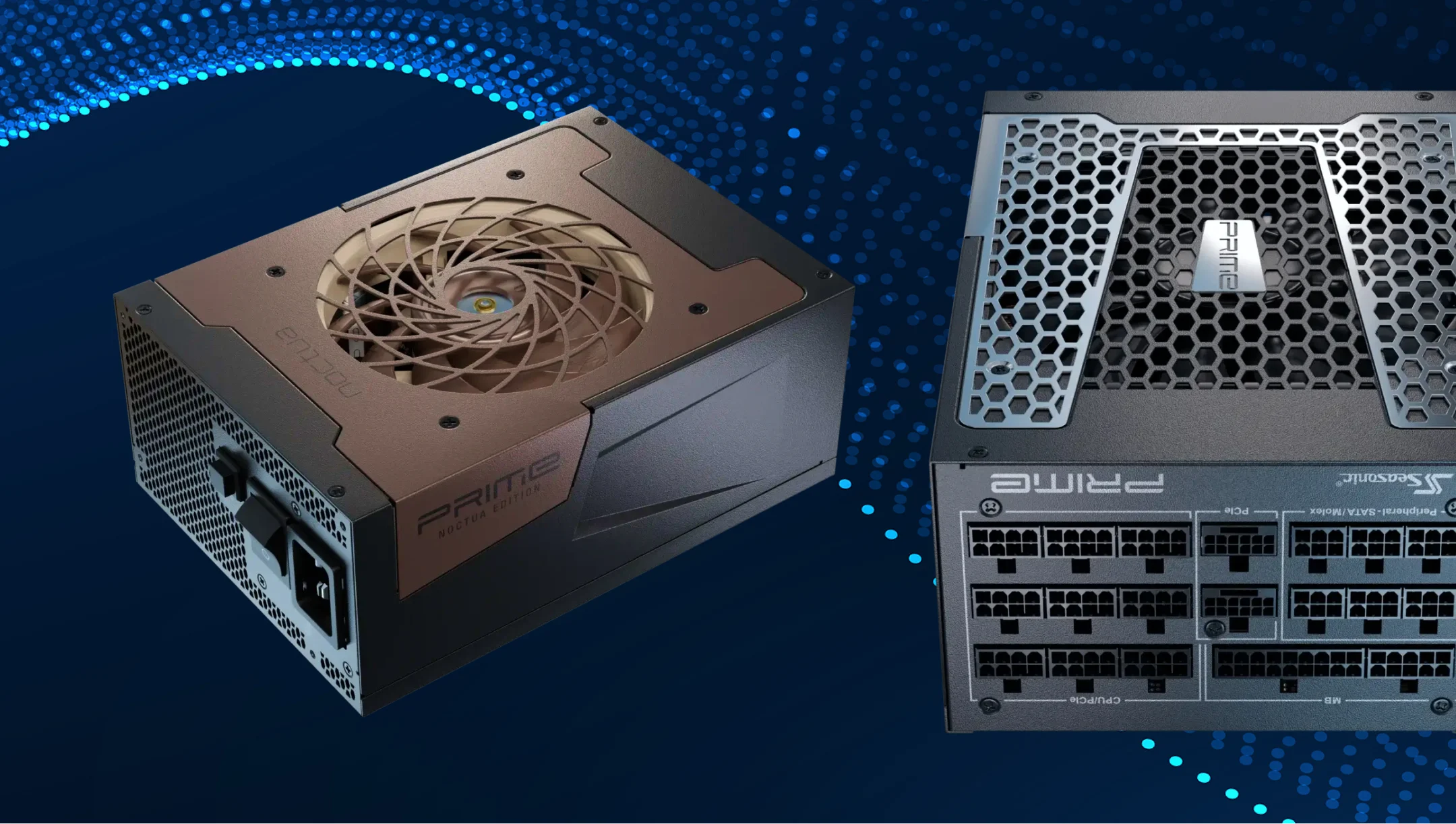
Seasonic PRIME PX-2200 ATX 3.1: Maximum power for extreme multi-GPU systems
The Seasonic PRIME PX-2200 PSU is a unit that perfectly fits workstations’ loads, AI training activities, and supports professional rigs with multi-GPUs. Its 2200W of power is a required standard for specific load and work scenarios that professional system integrators use.
We were talking about how just one RTX 5090 GPU can cause significant peak loads and require more power capacity from the PSU. When it comes to systems with multiple GPUs – standard 1000W–1600W PSUs just don’t really fit the use case anymore.
Seasonic positions the PX-2200 power supply as a solution for extremely high workloads. That is, for systems where power consumption easily exceeds 1500W and consistently stays closer to 1800–2000W at peak loads:
- AI training / inference;
- 3D rendering farms;
- multi-GPU workstation scenarios;
- server-like desktop systems.
The Seasonic PRIME PX-2200 PSU is fully compliant with ATX 3.1 and PCIe 5.1 standards and uses native 12V-2×6 connectors. In practical terms, this means three things:
- the Seasonic PRIME PX-2200 PSU is designed for modern GPUs with high transient spikes;
- there is no need for adapters, which introduce contact risks;
- the power supply is designed for long-term high-load scenarios.
If you look at what people actually say in enthusiast communities, the idea is pretty consistent: 2200W of power capacity only really comes into play when you’re running more than one GPU.
For most setups, like an RTX 5090 with a high-end CPU, 1200W–1600W is already more than enough. The 2200W range only starts to matter in multi-GPU or AI-heavy systems. And that’s the main point – the Seasonic PRIME PX-2200 PSU is a superior unit in the premium line, designed for a different workload class.
Power headroom comparison: 1300W vs. 1600W vs. 2200W for RTX 5090 builds
For RTX 5090 series GPUs, what really matters most is enough PSU headroom to handle real peak loads in any use scenario. Not average consumption but a headroom determines system stability at first. Below, we dive deeper into a comparison of the Seasonic PRIME PSU series across the available headroom for RTX 5090 builds – 1300W, 1600W, and 2200W.
The 1300W PSU is a low-line limit where the RTX 5090 GPU performs well in a single-GPU system. It performs as it should in pair with top-of-the-line CPU (Ryzen 9 X3D / Intel i9), 2–4 SSDs, and standard peripherals. Nevertheless, it has some limits in case your system runs under aggressive overclocking or long-term peak loads.
A perfect choice for:
- smooth gaming / 4K / high FPS;
- GPU rendering or AI inference on a single GPU;
- a quiet, well-balanced system without overspending.
Power supplies with 1600W of capacity are a sweet spot for systems that use RTX 5090 series GPUs in 2026. This power headroom gives enough power for handling RTX 5090 + high-end CPU, active GPU boost, overclocking scenarios, long-running AI and rendering tasks, and potential system expansion (additional graphics cards, more storage). At this point, the system can already sit around 900W–1100W under peak loads without really stressing the PSU.
The 2200W PSU is an extreme-class unit that supports systems that go beyond one GPU and perform as AI workstations and compute-heavy setups. These configurations can regularly consume 1400W–2000 W, with peaks going even higher:
- with 2× RTX 5090-class GPUs or equivalent high-end graphics cards;
- AI training and inference workloads;
- 3D render farms and simulations;
- workstation systems operating at a constant 80–100% load.
The difference between 1300W, 1600W, and 2200W headrooms in Seasonic PRIME PSUs comes down to how much load the system can handle consistently. With newer GPUs like the RTX 5090, choosing a PSU is less about hitting a specific wattage and more about matching the system’s actual load profile.
Abschluss
RTX 5090 systems require a power supply unit that’s solid and stable, capable of dealing with sudden power spikes without drops or risking the whole build. That’s exactly why the Seasonic PRIME ATX 3.1 lineup makes even more sense in 2026. Every unit from the premium line is built for real-world loads, not just specs on paper.
At the end of the day, picking a PSU for an RTX 5090 is about staying stable long-term, keeping things quiet, and knowing your system won’t freak out under load. It’s basically the core piece of hardware keeping everything smooth.